Indoor Composter – Our ‘NatureMill’ experiment continues in a new form.

Good news on the Indoor composting front.

A couple of months ago a manufacturer from the Far East contacted me about their new Indoor Composting machine, and after some deliberation I’ve invested in a test unit which has just arrived from the Far East.

First impressions are very good. The quality of manufacture appears excellent, and much more in the ‘white goods’ style than the NatureMill with a steel housing and high quality mouldings for it’s plastic and rubber parts. It’s larger than the nature mill, similar to a mini fridge, and it arrived with a 3 pin UK plug, ready to go. The unit is designed for 3-4 people, composting up to 1.5kg of food waste per day.

The unit is designed to be fast acting – composting waste in 24 hours using a Bio “fermentative” method of composting, which reduced waste volume by 90 – 95%. According to the designers it uses just 80 W/h and it’s operation should be odourless, as evidenced by rubber seals and a catalytic deodorizing feature acting on the air outlet. The output ‘compost’ is very rich and can be reduced down 1:3 with garden soil to use in the garden.

The retail price of the unit is unclear until we gain an idea of demand. If you are interested let me know. david@mediacopy.co.uk

Indoor composter
About the same size as a Beer or Wine Fridge.
Food Composter
Food waste is added from the top.
Bio Food Composter
Food Waste is mixed by the machine.
Bio Waste Food composter
Rubber seals on the lid mechanism and cover help ensure smell free operation.

NatureMill Experiment Ends :-(

Well, our NatureMill is no more. Or at least no more with us.

Our original test unit has been sold on and we’ve no more plans to persevere with the units. It’s a shame as the concept is good and the technology required relativly simple but I can’t say it really worked for us.

We’re still interested in finding and marketing a domestic indoor composting unit, so if you have one let me know !

email: david@mediacopy.co.uk

Measure your skiing

A coach and friend of mine recently blogged on “Adaptability or Versatility” in the context of recreational skiing, and pointed out that while racing is obviously ‘measured’, usually by a stop watch, Recreational skiers and skiing is typically ‘judged’.

Ski School instruction is an good example, where as a learner you are set a task by your Ski Instructor. You attempt the task, skiing down to your Instructor who gives you their judgement on your performance. This approach has it’s place, but an undesirable result can be a focus on “How do I look?”, rather than “How effective was my skiing?”, or to put it another way, Style over Effectiveness!

Instead I’d suggest that many recreational skiers would benefit from viewing their skiing like racers do, ‘measuring’ the outcome of a given run rather than relying on someone else to judge it. For example at it’s most basic your desired outcome might be “get down the run safely and having a good time while doing it”*

It doesn’t matter what it ‘looked like’ when you have achieved the outcome you wanted. As you gain more control over your skiing you can aim for more specific outcomes. The next step could be “get down the run safely, have a good time, AND maintain a constant speed.” and so on, adding more specific measures as your skill develops. Importantly by using these are ‘measured’ outcomes you can assess for your self the success (or not) of your skiing, and if you want they give you the means to learn from every run of the day.

One of the key benefits of the Coaching process is that your coach can provide you with the tools to be able to ‘assess’ YOUR own performance, which in turn means that you can take more control over your ski learning, feel better about your skiing and change it as you need.

*borrowed from the link above.

Shropshire Skiing – The Wrekin

Trip 2

The following Monday night and Tuesday day saw a fresh fall of snow across Shropshire. We had enough to cover the Dendex at Madeley giving a brief period of floodlit, lift served night skiing which I took full advantage of.

With a Saturday trip back to South Shropshire arranged with some fellow Instructors from the slope, by Friday I was tempted to check out The Wrekin. A walk up a week or so previous had shown some hard packed cover at the top and with the extra snow it could be good for a few turns.

An early finish in the Office, packing the car with Dog, Skis and the usual stuff I arrived at the bottom at around 3pm with the light already fading.

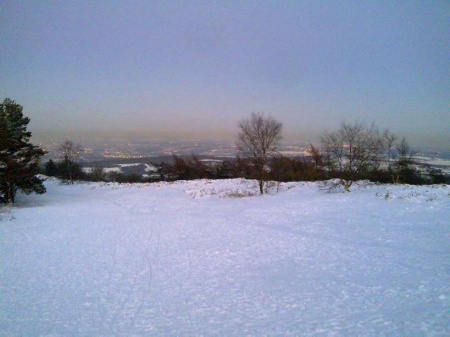
Boot’s on, Skins attached I made it as far as the dog leg below the cafe before deciding to bootpack the rest of the way, ski’s on my pack. At about half way I came across some Snowboarders who reported enough snow for some turns at the top. Spurred, not least by the fading light I made to the top, grabbed some ‘sunset’ photo’s and popped my ski’s on.

The ski down at the dusk went as far as the tree line before the rocks called an end to the slide. I’m guessing it amounted to around 150m of vertical but all the better for being on my ‘local’ hill. An unsteady walk down a ‘short cut’ in ski boots followed.

PS. Some video below shot the following year:

Shropshire Skiing – First Tracks.

Trip 1.

By the start of January 2010 Shropshire had been in the icy grip of Winter for weeks. Finally it had snowed and the temptation to see of Shropshire Skiing was possible was too much.

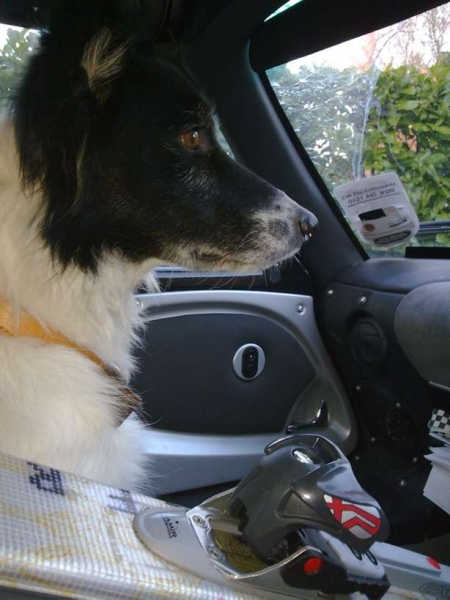
In the Summer I’d picked up a pair of touring bindings and set them up on a spare pair of twin tips. A pair of second hand ‘skins’ had been acquired and I was looking for an excuse to see if my ski tech skills were anything like. So I loaded up an inappropriate car with dog, ski’s and the usual paraphernalia and set off.

Dog, 1080s, Lotus Elise

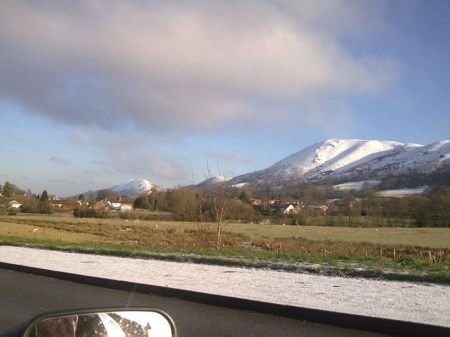
I ended up crossing through Much Wenlock to Church Stretton with the idea of maybe skiing Hope Bowdler Hill. I ended up dropping in to Stretton and heading towards Carding Mill Valley, but on a whim kept going to look at Caer Caradoc and The Lawley now across the Valley.

Caer Caradoc and The Lawley

The Lawley looked a good bet, so I picked up an OS map in town and found the path to walk up. I was in two minds whether to take the gear, but decided it was worth a punt.

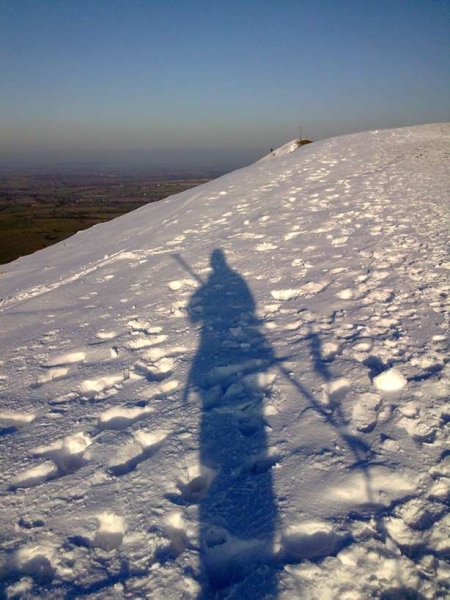
Skier on the Lawley

There was decent coverage at the top, a bit crusty but enough for some sweet turns right down to the gate.

Skis at the bottom of the Lawley

Caer Caradoc looked a tempting in the sun set, but it was too late for a hike up.

Caer Caradoc ripe for skiing

Clip Fix – v3

Quick update. The second "clipfix" failed and compost would not transfer from the upper to the lower chamber. I’ve just received my 3rd ‘fix’ from NatureMill and will fit is soonest. Update to follow so Fingers crossed.

This week I visited a ‘Sustainability’ show at the NEC Birmingham and came across a stand dealing in ‘starter’ bacteria, usually for septic tanks. I picked up a sample pack and will add a pinch when I restart the NatureMill. The company was confident it would make a big difference to the composting process.

Learning to ski ? Know your DIN Settings.

A friend of mine once tried bungie jumping. Standing on a high bridge, the next guy up stepped forward so that the Instructor could attach the harness and bungie cord for his jump. For a ‘Laugh’ the Instructor started to attach the cord around his neck, no doubt expecting the guy to object and see the ‘joke’. In this case the guy didn’t object at all and seemed quite prepared to jump. Perhaps it was because he had implicit trust in the Instructor, or maybe he didn’t know any better ! Which ever, it goes to show how reliant you are on the ‘experts’ when starting out in a new sport.

Skiing is no exception. As a learner you are confronted with lots of unfamiliar equipment and you rely on the experts from the hire shop to set it up correctly for you. If the ‘experts’ mess up, or are maybe not expert at all, you could be at risk. A group of friends recently went on holiday and hired skis and boots from the local hire shop. On the first morning one of them fell, suffering a knee injury after the skis failed to come off.

The problem was incorrectly calculated settings for their ski bindings. On a hunch I checked the ‘shop’ settings for their ski bindings against the industry standard charts. For each person the shop had set them too high, making it harder for the ski’s and boots to separate in the event of a fall. Appalling service from so called experts.

This could happen to you, but it’s simple to avoid.

Ski bindings are adjusted according to a "DIN" value so that your skis and boots separate in the event of a fall. The idea is to reduce the chance of leg and knee injuries. Your DIN value is calculated from information including your weight, height, the sole length of your ski boot, how aggressively you ski and your age. DIN settings are an international standard and are transferable between different makes of Alpine ski bindings.

Because DIN values are an industry standard there are lots of charts and spreadsheets available online to make working out your own personal DIN setting quick and simple. Once you know your DIN setting you can give it to the shop each time you hire (or buy) ski’s so that they can set them correctly. As a precaution double check visually that they have been set as requested before you leave the shop. Expect the front \ rear \ left \ right settings to be the same. If in doubt have them double checked by a qualified expert.

Try this link for DIN Charts: http://www.dinsetting.com/dinchart.htm

DISCLAIMER: This article is for information only. Always have your bindings checked and adjusted by a professional.

Front Binding. Check the DIN setting through the sight glass.
Rear Binding, showing up & down positions. DIN setting best seen on right ski in up position and in this case is represented using a diagonal marker.

Variable Conditions – Have a plan….

Sorry for not posting recently. It’s been a fantastic season so far and I’ve been busy Teaching, Skiing and having fun

I’m going to kick off my first post for a while with some thoughts on variable conditions. This time of year (March\April) conditions change massively between the first and last run of the day, and the techniques you use after breakfast may well trip you up just before tea.

Off piste skiing is a big favourite of mine and I’ve just counted at least 8 different ways I’ve used this week to make arcs. In a single run the snow can vary between wind blown crust, to powder, to slush and my skiing has to change as I adapt to the conditions under foot. The same applies when skiing on piste. As the aspect, width, steepness, altitude of the run varies the snow conditions will change. Other factors include the time of day, the weather and the amount of skier traffic.

Luckily from the moment your skis touch the snow (and often as soon as you glimpse the snow on the way to the lifts) you will be making a sub conscious evaluation of the snow conditions. It’s helpful to make this a conscious thought process, especially if you are new to skiing.

The snow gives you a lot of clues to help you choose from your ‘tool box’ of techniques the best one(s) for a particular slope. On the approach to the start of the run:

  • Listen to your ski’s ? Are they rattley or quiet ?
  • Feel for the snow underfoot – Is it soft or hard, slushy or frozen ?
  • Look at the snow – Is it lumpy, hard or soft, fresh, deep, pisted ?
  • Texture is a good one – Is it pisted corduroy, Wind blown crust or soft slush.

Some of these clues might be scary – rattley ski’s on a hard piste early in the morning can be intimidating. But forewarned is forearmed and by considering the conditions you can start each run with a clear idea of which technique you are going apply.

Sometimes it takes a couple of arcs to confirm your initial impressions, so be prepared to adjust your approach and you will need to keep adjusting as things change during your descent.

Having a wide repertoire of skiing techniques gives you the best chance of success on any given day. You’ll have more choice from more ways to ski different conditions. It means that you can have more fun more of the time, and not have your day cut short should the snow conditions change !

Variable conditions can be tricky….

The Wonder of Woolys

I found myself standing in WoolWorths today waiting for my Wife.

I wondered what’s the shop for ? In our branch there isn’t much focus – I’d just bought a ?1.99 Climbing Rose and she was buying a DVD.

It’s OK. I’ve worked it out. It’s for selling cheap stuff. Cheap CDs, Cheap DVDs, Cheap Roses (!) etc. etc. A bit like a pound shop but with scope for higher prices. Genius. An impending recession – It’s the future!

I find my Wife but no DVD. No purchase.

Why ? They couldn’t find the original disc in their filing system. Lost sale.

Maybe not the future quite yet. 🙁